

Sri Lankan Tea Culture: From Colonial History to Ceylon Tea
Discover the fascinating journey of Ceylon Tea – from Scottish planters to global recognition, and why Sri Lanka produces the world’s finest black tea.
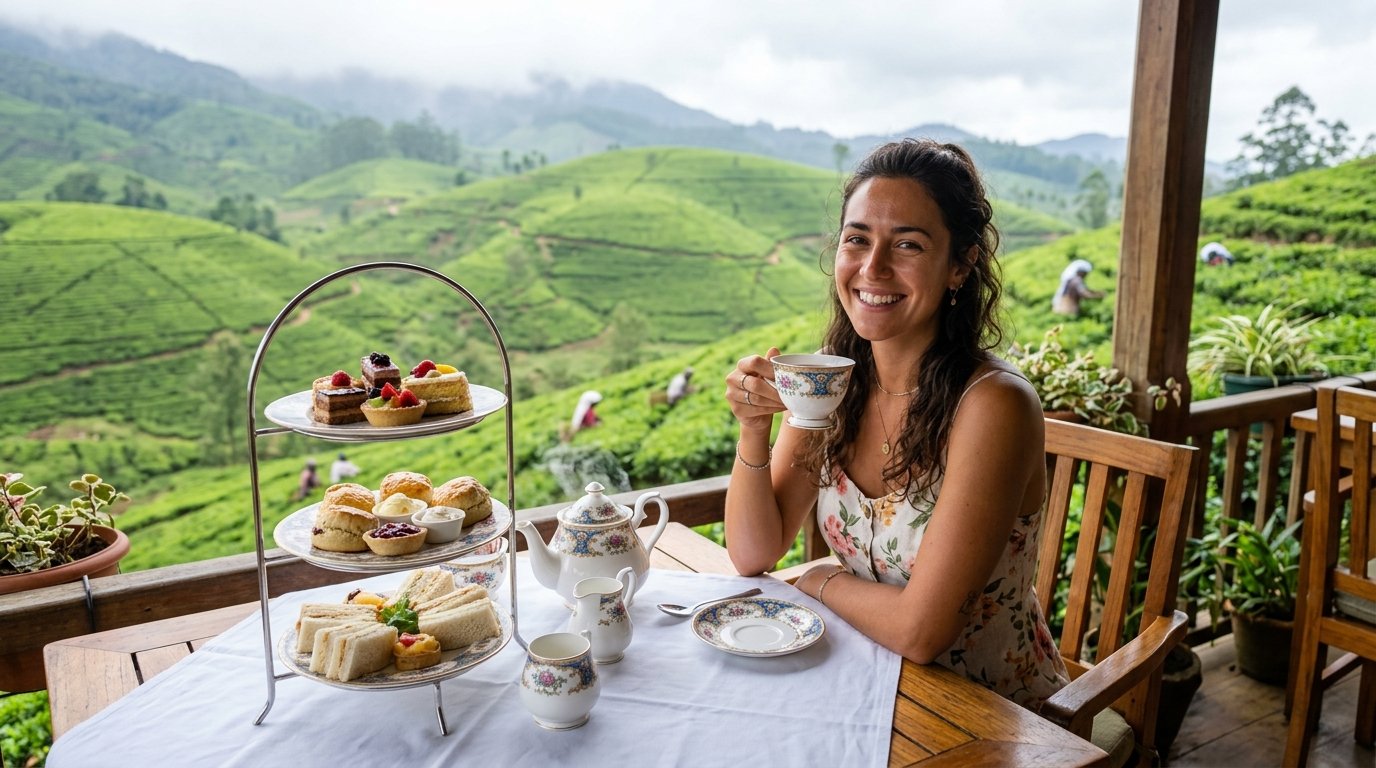
Sri Lankan tea culture spans over 150 years of rich agrarian history, transforming misty hill country peaks into the world’s most celebrated tea estates. For international visitors, experiencing the journey from leaf to cup is an absolute must-do.
Verified under official agricultural standards by the Sri Lanka Tourism Development Authority (SLTDA), this guide explores the history of Ceylon tea, growing elevations, and estate tours. For complete island route planning, also explore our companion Sri Lanka Tour Planning Guide.
Navigating winding mountain roads to reach high-altitude estates requires experienced driving. With a private chauffeur from CeyGlow Tours based near CMB Airport in Katana, your journey to Nuwara Eliya and Ella is comfortable, safe, and tailored to scenic stops away from crowded tour buses.
1. History of Sri Lankan Tea Culture & James Taylor
The story of Sri Lankan tea culture began in the 1870s when coffee rust devastated the island’s coffee plantations. Scottish planter James Taylor planted the first successful commercial tea estate at Loolecondera in Kandy, saving the island’s agricultural economy.
The Coffee Blight
In the 1870s, fungal disease wiped out 110,000 hectares of coffee, forcing planters to rapidly pivot to resilient tea crops.
James Taylor’s Vision
In 1867, James Taylor planted 19 acres of tea and perfected processing techniques, exporting the first successful shipment to London in 1873.
Global Acclaim
Ceylon tea quickly gained worldwide fame at international exhibitions, establishing the island as the premier global black tea exporter.
2. The Seven Tea Growing Regions
Sri Lanka’s diverse topography and microclimates create seven distinct tea-growing regions, each yielding teas with unique aromas and liquor characteristics.
| Region | Elevation | Character | Best Enjoyed |
|---|---|---|---|
| Nuwara Eliya | 6,000 – 7,500 ft | Light, floral, delicate | Afternoon tea |
| Uva | 3,000 – 5,000 ft | Aromatic, pungent | Morning with milk |
| Dimbula | 3,000 – 5,000 ft | Bright, citrus notes | All-day drinking |
| Kandy | 2,000 – 4,000 ft | Strong, full-bodied | Breakfast tea |
| Ruhuna | 0 – 2,000 ft | Dark, strong, malty | Strong brew lovers |
3. Tea Grades: From Orange Pekoe to Silver Tips
Ceylon tea is graded according to leaf size and appearance rather than flavor quality alone.
Orange Pekoe (OP)
Long, wiry whole leaves producing a light, subtle liquor. Named after the Dutch House of Orange.
Broken Orange Pekoe (BOP)
Smaller broken leaves that brew quickly into a robust, strong cup—the everyday favorite for milk tea.
Silver Tips
Handmade from rare, unopened silvery buds sun-dried to produce a pale gold liquor with natural honey sweetness.
Ceylon Green Tea
Unoxidized leaves offering a fresh, vegetal flavor profile rich in natural antioxidants.
4. What to Expect on a Factory & Plantation Tour
Visiting an operational estate lets you witness traditional tea processing steps: withering troughs, mechanical rolling, fermentation rooms, and high-temperature drying ovens. Afterward, participate in a professional cupping session guided by a resident tea sommelier.
5. Why Explore Sri Lankan Tea Culture with a Private Chauffeur
Navigating mountain passes by public bus can be exhausting. A dedicated private chauffeur from CeyGlow Tours provides seamless, door-to-door comfort, direct access to boutique tea factories, and flexible scheduling through the scenic hill country.