
Sri Lankan Culture & Traditions: Essential Traveler’s Guide
Navigate Sri Lanka’s rich cultural tapestry with confidence – from sacred temple etiquette to traditional greetings, learn the customs that enrich your journey.
Sri Lankan culture spans over two millennia, shaped by Theravada Buddhism, colonial heritage, and diverse ethnic traditions. For international visitors, understanding local customs transforms a standard sightseeing trip into an unforgettable cultural immersion.
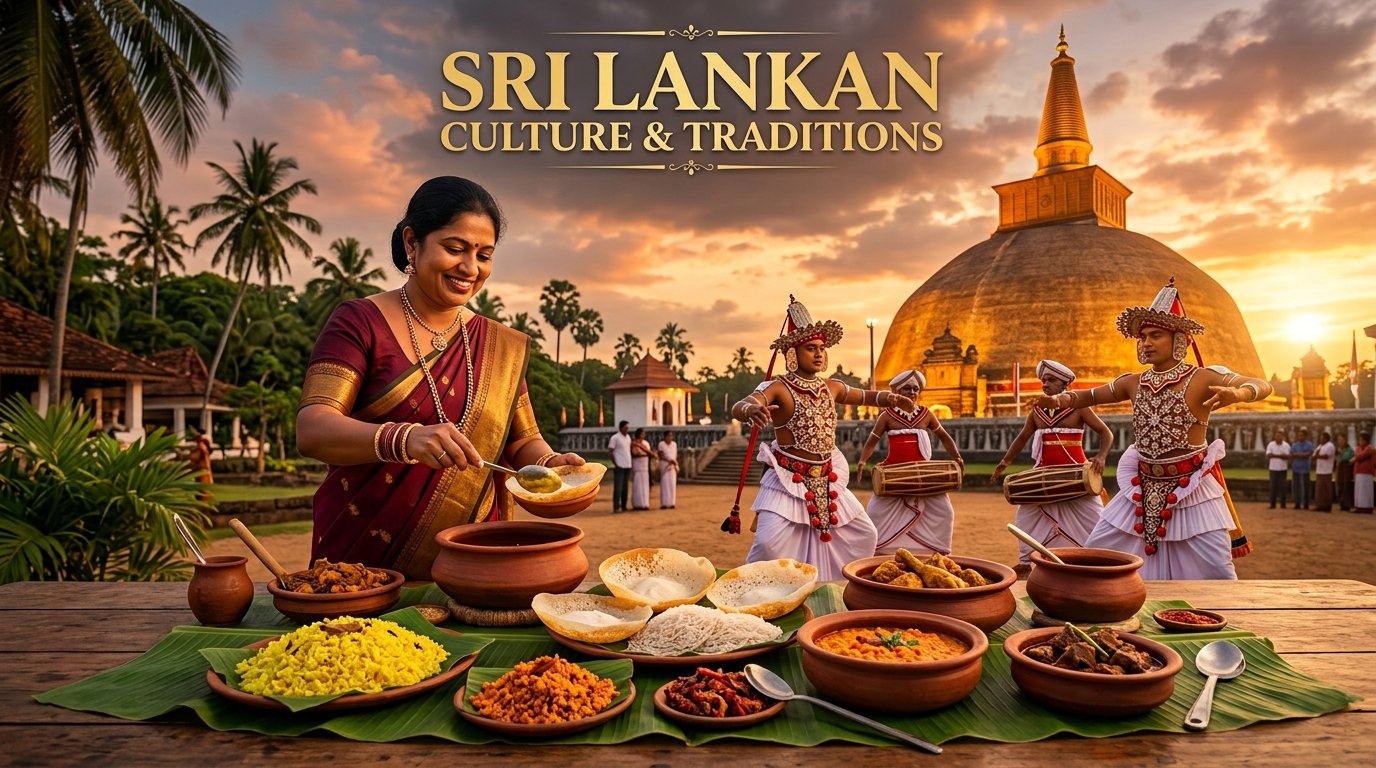
Verified under official heritage standards by the Sri Lanka Tourism Development Authority (SLTDA) and UNESCO cultural frameworks, this essential guide unveils temple etiquette, dining customs, and festival calendars. For complete island route planning, also explore our companion Sri Lanka Tour Planning Guide.
Navigating sacred sites and local villages requires mindfulness. With a private chauffeur from CeyGlow Tours based near CMB Airport in Katana, your guide ensures respectful temple entry, explains subtle social cues like the head wobble, and guides you toward authentic local experiences away from crowded mass-tourist routes.
1. Core Pillars of Sri Lankan Culture & Religious Etiquette
Because 70% of the population practices Buddhism, daily island life is deeply influenced by spiritual mindfulness, respect for elders, and community harmony.
Temple Conduct
Always remove shoes and hats before stepping onto temple grounds. Cover your shoulders and knees completely, and never pose with your back turned to a Buddha statue for photographs.
Social Greetings
Greet locals with *”Ayubowan”* (may you live long) while pressing your palms together in a prayer-like gesture. A smile is universally recognized as the island’s warmest currency.
Dining Customs
Traditional rice and curry meals are eaten using clean fingertips of the right hand exclusively. The left hand is strictly reserved for hygienic purposes and should not be used to pass food.
2. Essential Cultural Do’s and Don’ts
Keep this quick reference guide handy to honor local norms and ensure smooth, respectful interactions throughout your holiday.
| Cultural DO’s | Cultural DON’Ts |
|---|---|
| Greet elders and locals with “Ayubowan” and joined palms. | Never use your left hand to eat, give gifts, or hand money. |
| Remove footwear and headwear before entering homes or temples. | Never touch someone’s head, as it is considered the most sacred part of the body. |
| Dress conservatively in public areas, covering shoulders and knees. | Avoid public displays of affection, which violate traditional modesty norms. |
| Ask for permission before photographing local residents or monks. | Never point your feet directly at sacred statues, shrines, or monks. |
3. Living Traditions: Arts, Ayurveda & Astrology
Sri Lanka’s heritage extends far beyond ancient ruins into daily artistic expressions, holistic wellness, and astrological scheduling.
Kandyan Classical Dance
UNESCO-recognized rhythmic performance featuring vibrant traditional costumes, acrobatics, and rapid drumming originating from royal hill country courts.
3,000-Year-Old Ayurveda
An ancient holistic medical system utilizing herbal oils, steam baths, and specialized dietary regimens to balance mind, body, and spirit.
Auspicious Astrology
Major life milestones—including weddings, housewarmings, and commercial openings—are strictly scheduled according to exact astrological planetary charts.
Traditional Handloom Weaving
Intricate village cottage industries producing colorful cotton fabrics, sarees, and household textiles using generational wooden looms.
4. Major Festivals & Celebration Calendar
The island’s festive calendar highlights its multicultural harmony, bringing communities together through light, prayer, and pageantry.
Vesak Poya (May)
Commemorates Buddha’s birth, enlightenment, and passing. Streets illuminate with giant paper lanterns, and free food stalls (*dansalas*) showcase boundless hospitality.
Kandy Esala Perahera (July/August)
Asia’s most dazzling religious pageant. Ten nights of fire-dancers, whip-crackers, drummers, and magnificent armored elephants parading the Sacred Tooth Relic.
Sinhala & Tamil New Year (April)
The national harvest celebration marking the sun’s transition. Families engage in traditional street games, light hearths at precise astrological times, and share milk rice.
5. Why Explore Sri Lankan Culture with a Private Chauffeur
Independent bus travel or rigid group tours often shield you behind glass windows. A dedicated private chauffeur from CeyGlow Tours opens doors to village homes, translates local nuances, and guarantees seamless cultural immersion.